Restaurants and cafés
Food and labour decide it. Everything else is noise.
A kitchen does not go under because the branding was wrong. It goes under because a few ingredient prices moved, a few dishes were priced in 2023, and nobody found out until the quarter closed. BizBoard is built around those two numbers.
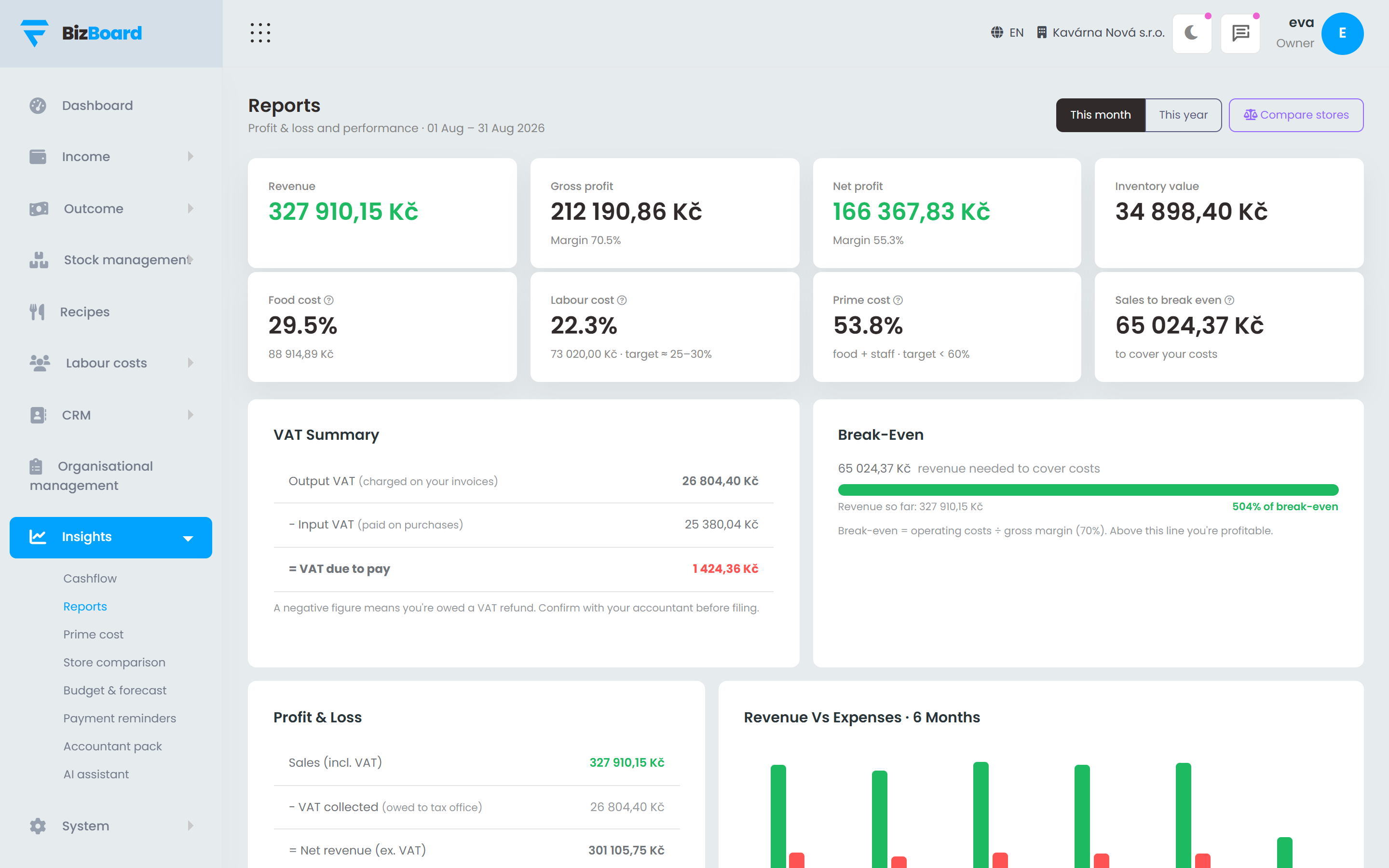 Shown with demo figures
The four leaks
Where a kitchen's margin actually goes
None of these are mysterious. They are just invisible until something counts them.
1. A supplier put a price up and nobody said anything
It is rarely announced. It arrives as a slightly larger number on a bill among nineteen others. BizBoard compares every line against what you last paid for that item and tells you the day it changes — with the percentage and what it costs you a month at the volume you actually buy.
- Caught on the bill that raised it, not in a quarterly review
- Priced in money per month, so you can tell a real rise from a rounding error
- With a cheaper supplier underneath it where one has published a price
2. The dish everybody orders is the one losing money
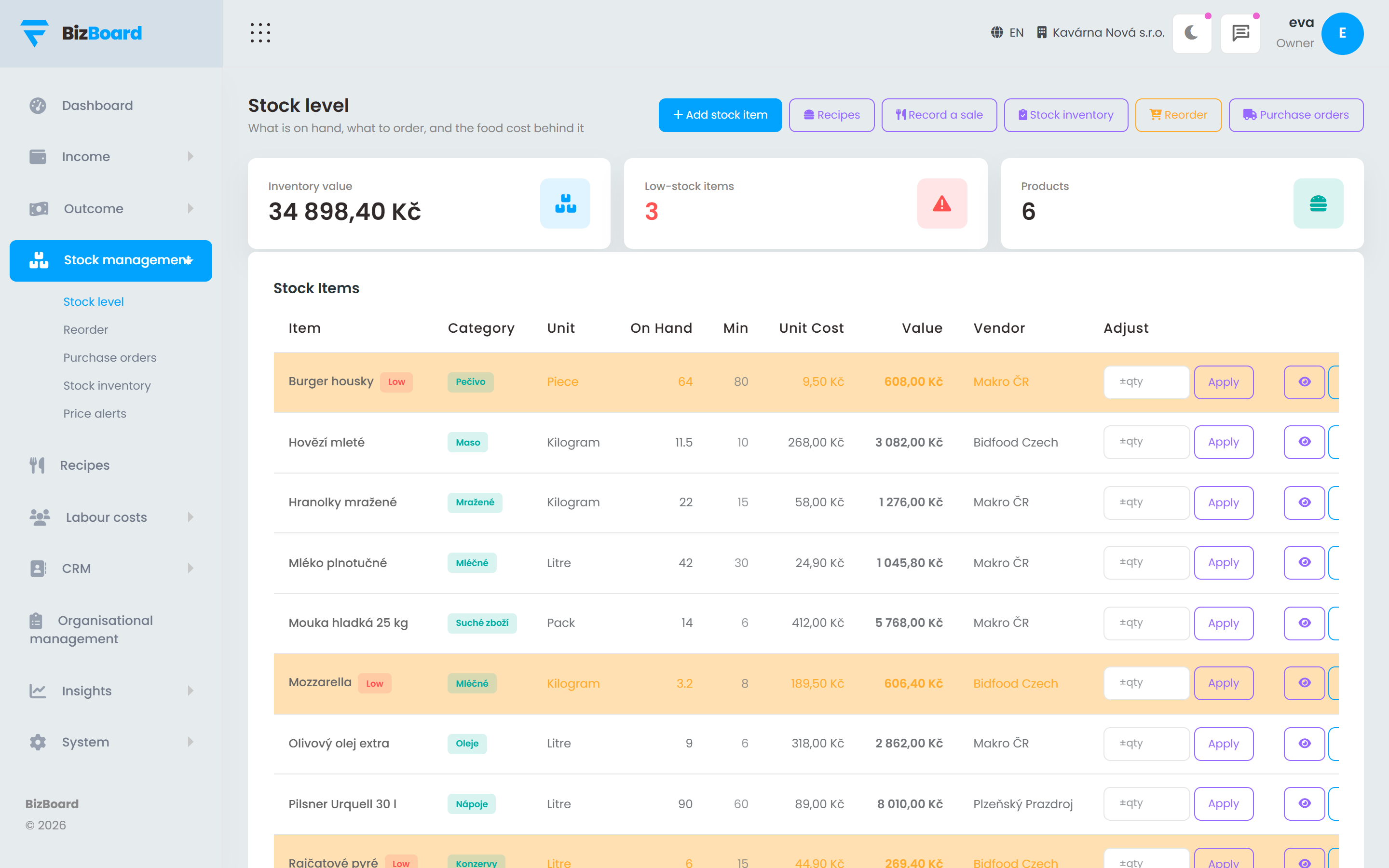
Give a dish its recipe and it has a cost — a real one, that moves as your buying prices move. Put that next to the menu price and next to how many you sold, and the menu stops being a matter of taste.
- Margin per dish, recalculated when a cost changes
- Sold against cost, so volume and margin are seen together
- Ingredients leave stock as dishes sell, with no counting
3. Labour was worked out after the week was over
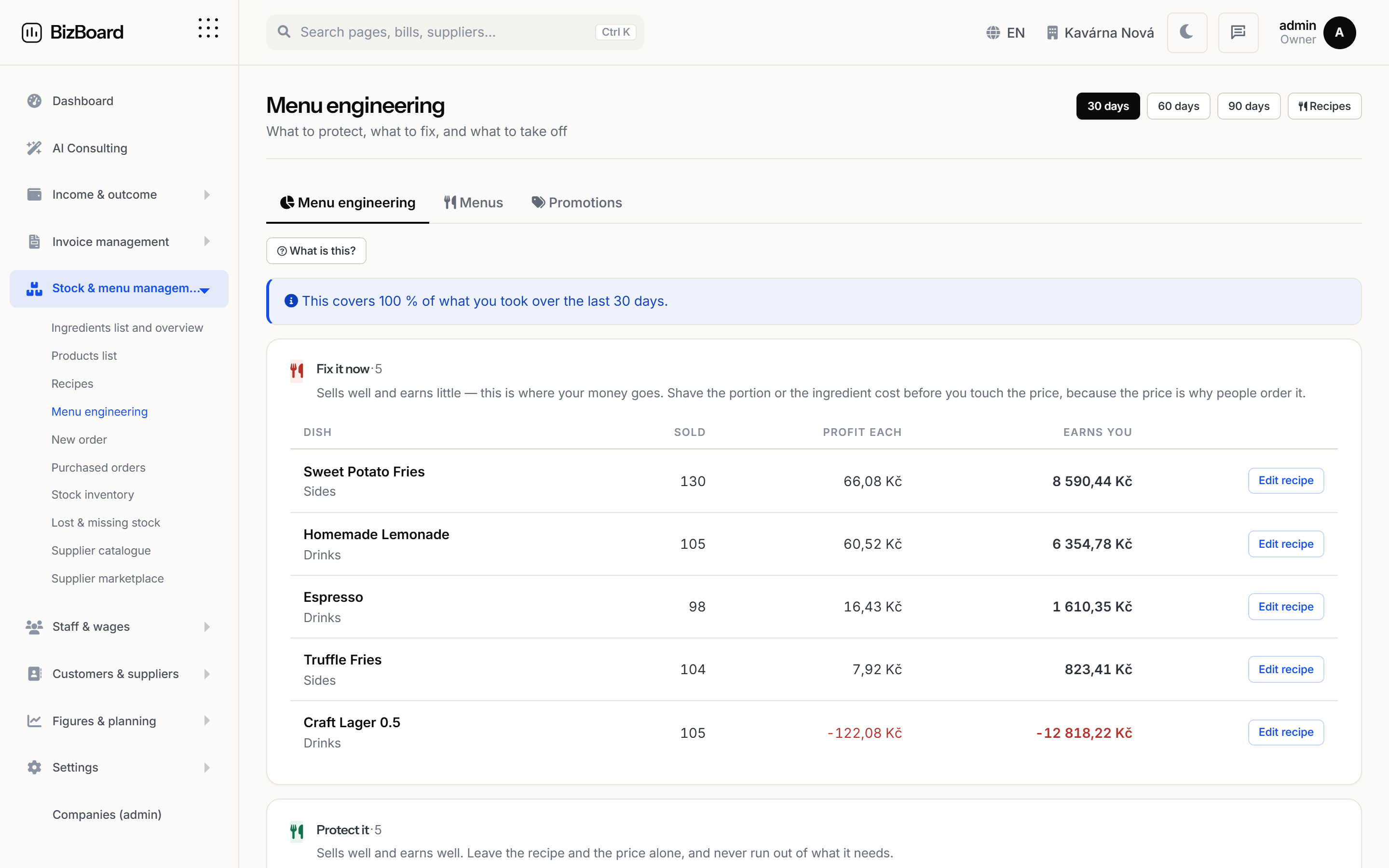
The rota is a plan; the hours people actually work are the record. Both live in the app, next to each other, so the gap between them is visible on Wednesday rather than reconstructed on the 8th.
- Staff submit their hours; a manager prices and approves them
- Labour cost against the day's takings, as the week runs
- Your busiest hours and days, so next week's rota can match them
4. The difference between what should have gone and what did
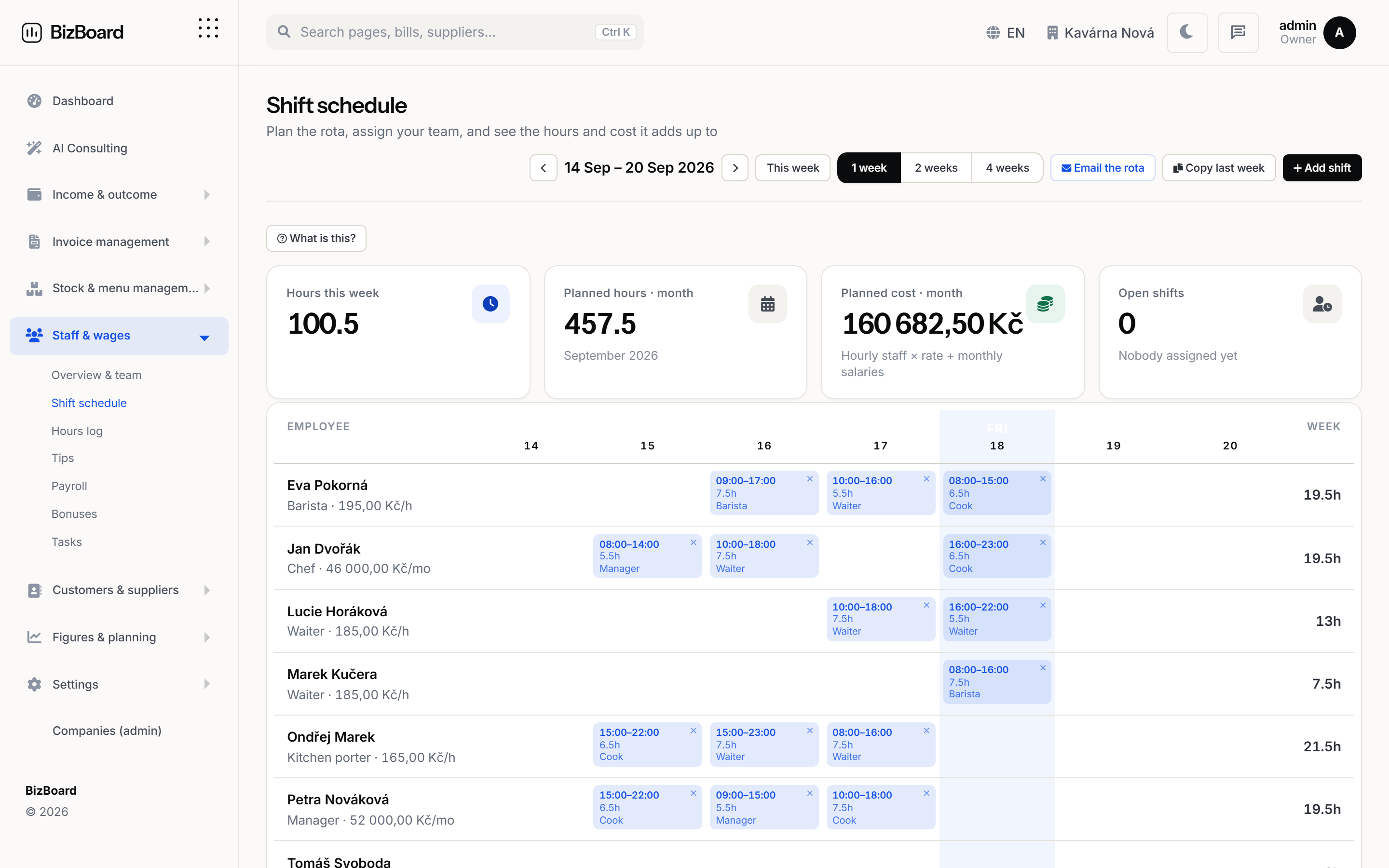
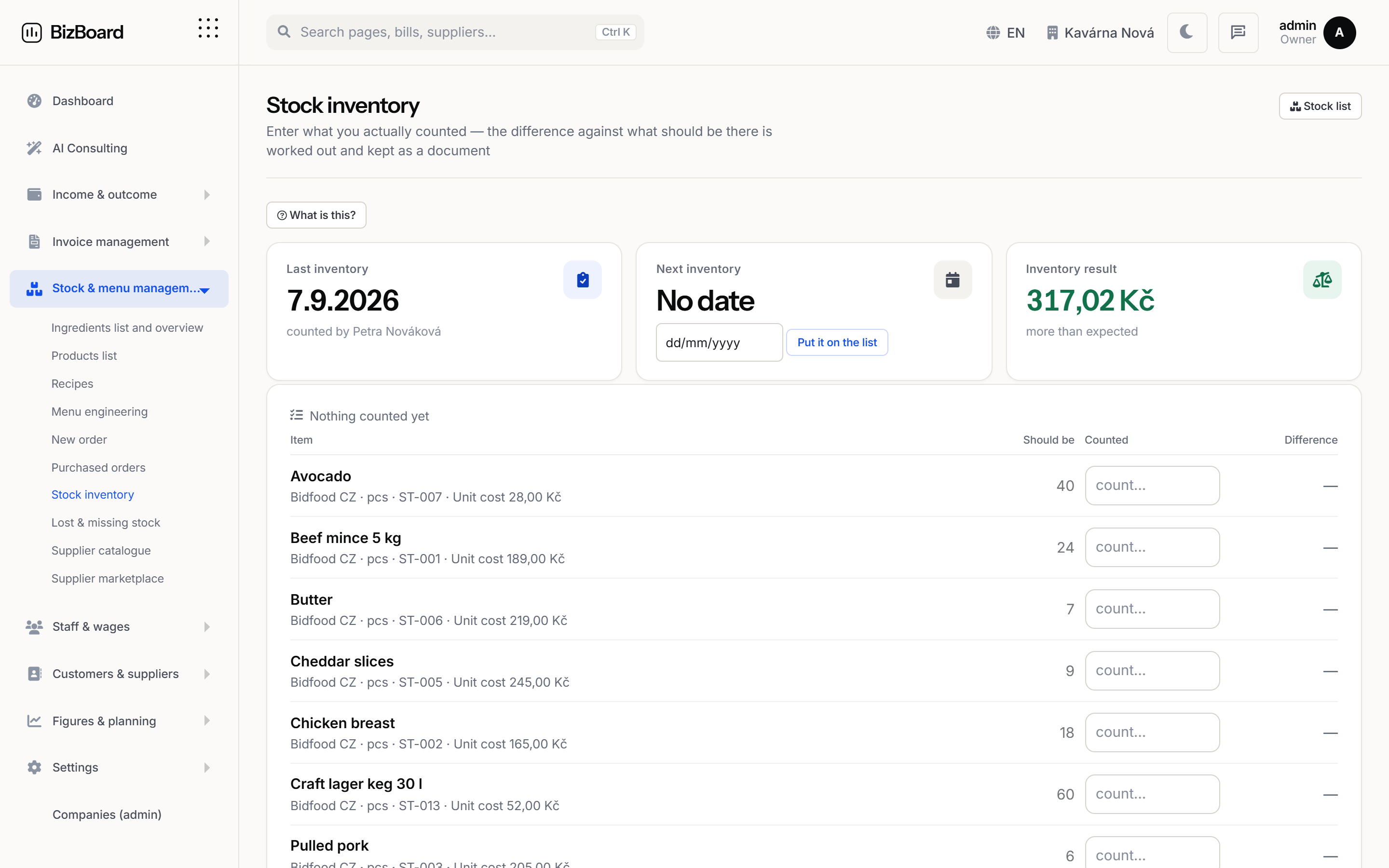
Recipes say what should have left the store room for the dishes you sold. A count says what actually left. The difference is waste, breakage, staff food, over-portioning or a recipe that is not what the kitchen really does — and all five are fixable once they have a number.
- Counts reconcile against what the sales implied
- Waste and staff food recorded as what they cost
- Reorder lists that become purchase orders and come back as stock
The floor
Tips that people accept
A tip goes to whoever was on the floor when it was rung up. Tips from orders with nobody assigned — the QR menu, delivery, the terminal by the door — go into the day's pool and are shared by hours worked that day.
It is not a clever algorithm. It is the rule most teams would agree to if somebody wrote it down, applied the same way every week, with the workings visible to the people it pays.
- A sale carries who was onFrom the till, where the till knows, and from the rota where it does not.
- Attributed tips go to that personDirectly, with the order they came from recorded against them.
- Unattributed tips pool by dayAnd are shared out by hours worked that day, so nothing sits in a pot with no owner.
- Everyone sees their ownOn their own login, with the shifts they were paid for.
And the rest of it
The ordinary back office, also done
Know what the week cost while you can still change it
Set your country, connect your till and your inbox, and let the month close itself.