Agencies and services
You sell hours. Know what they cost and whether they were paid.
A service business has no stock to count and no till to reconcile. It has invoices that go out, hours that go in, and a gap between the two that nobody measures until the year is over.
 Shown with demo figures
The three that matter
Getting paid, staying paid, and knowing what it cost
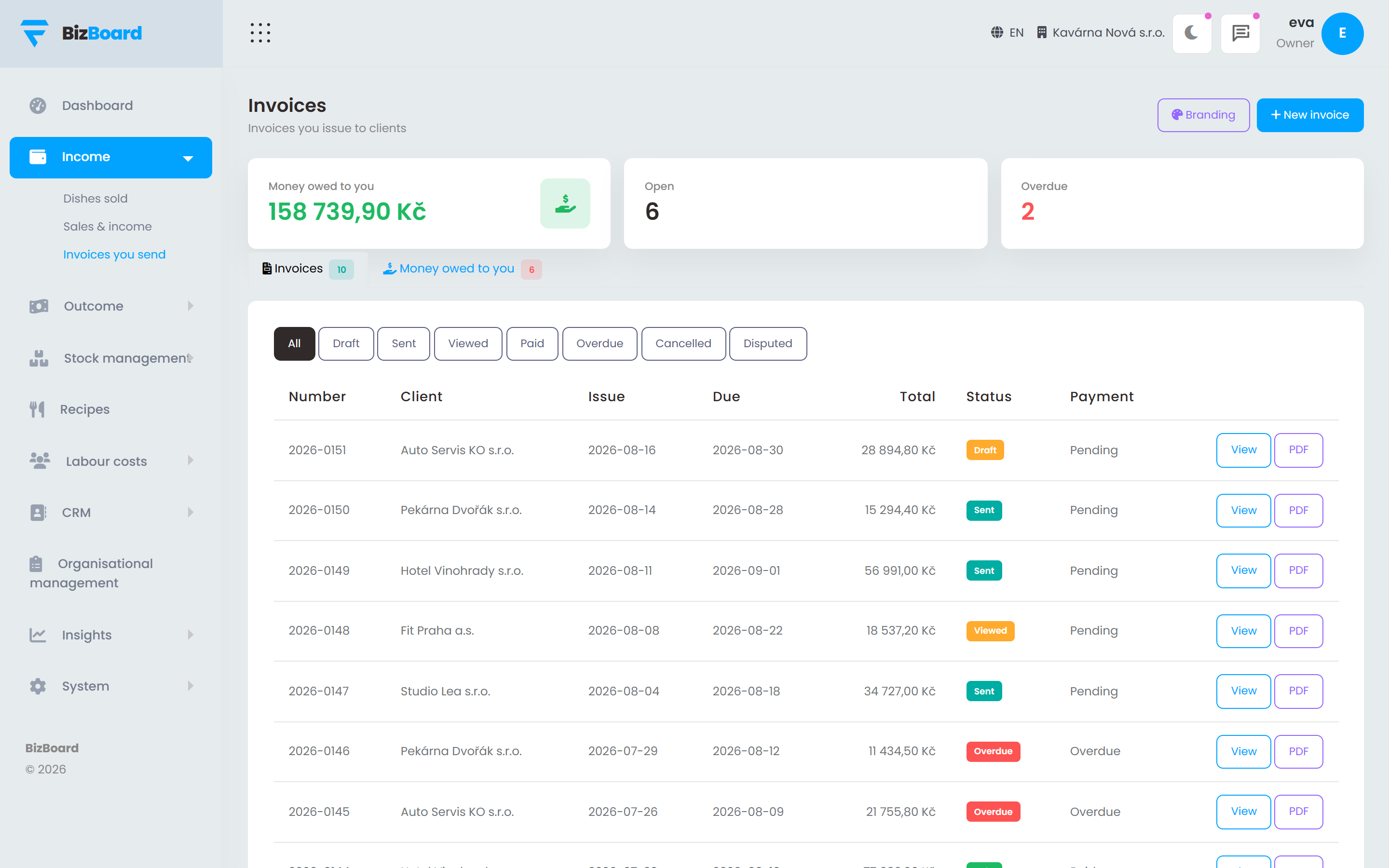
Invoices that chase themselves
Raise an invoice with your terms, send it, and watch it move from sent to due to overdue without keeping a list anywhere else. Reminders go out at the interval you set, so the awkward email is something the system sends rather than something you put off.
- Numbering, VAT and the legal wording set for your country
- Payment QR codes where your country uses them
- Everything you are owed, oldest first, in one list
- Recurring invoices for retainers, raised on their own
Cash you can see coming
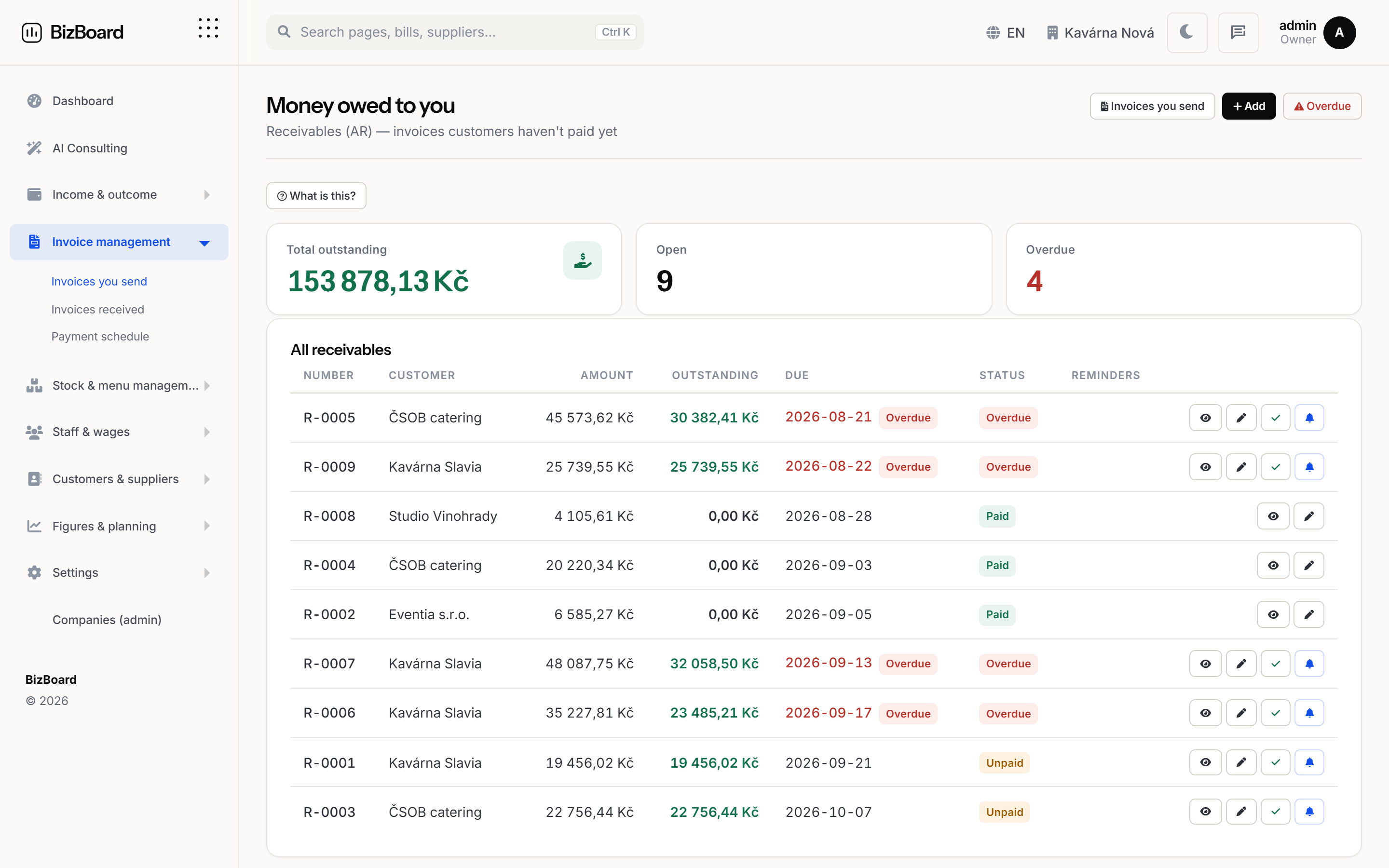
Agency cash is lumpy: a large invoice lands, then nothing for six weeks while the salaries go out regardless. The ninety-day view is built from invoices you have actually raised with the terms you actually gave, and bills you have actually approved — not a smoothed average.
- Every point on the line opens into the documents behind it
- Recurring costs included, because they are the predictable part
- What to pay first when a week is tight
Hours, against what they were sold for
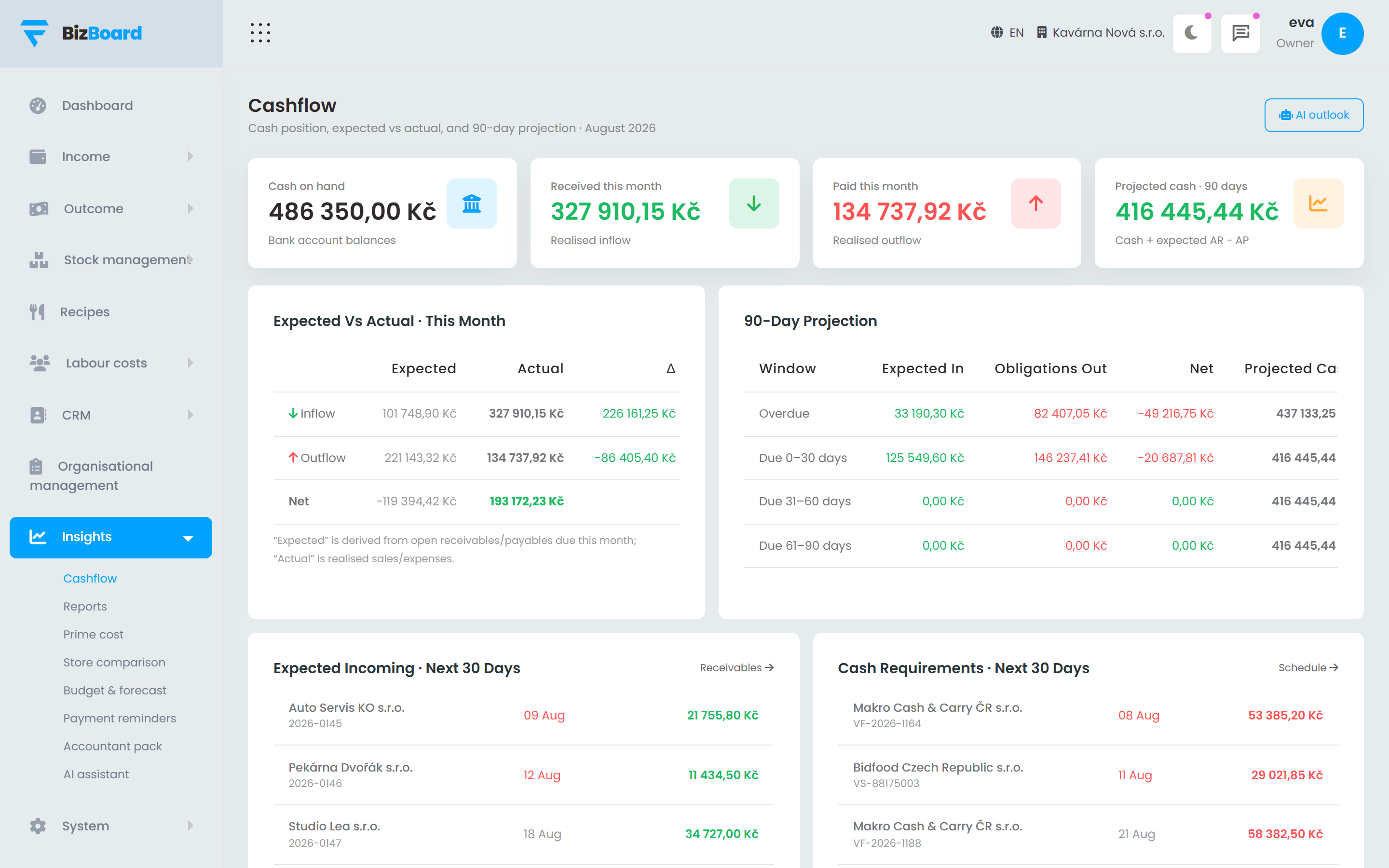
People log the hours they worked, a manager approves them, and only then do they count. Put those against what the client was invoiced and the question of whether a piece of work was worth doing has an answer rather than a feeling.
- Submitted by the person, priced and approved by a manager
- Staff see their own hours and tasks, never the revenue
- Tasks with an owner and a date, discussed in comments
And the paperwork
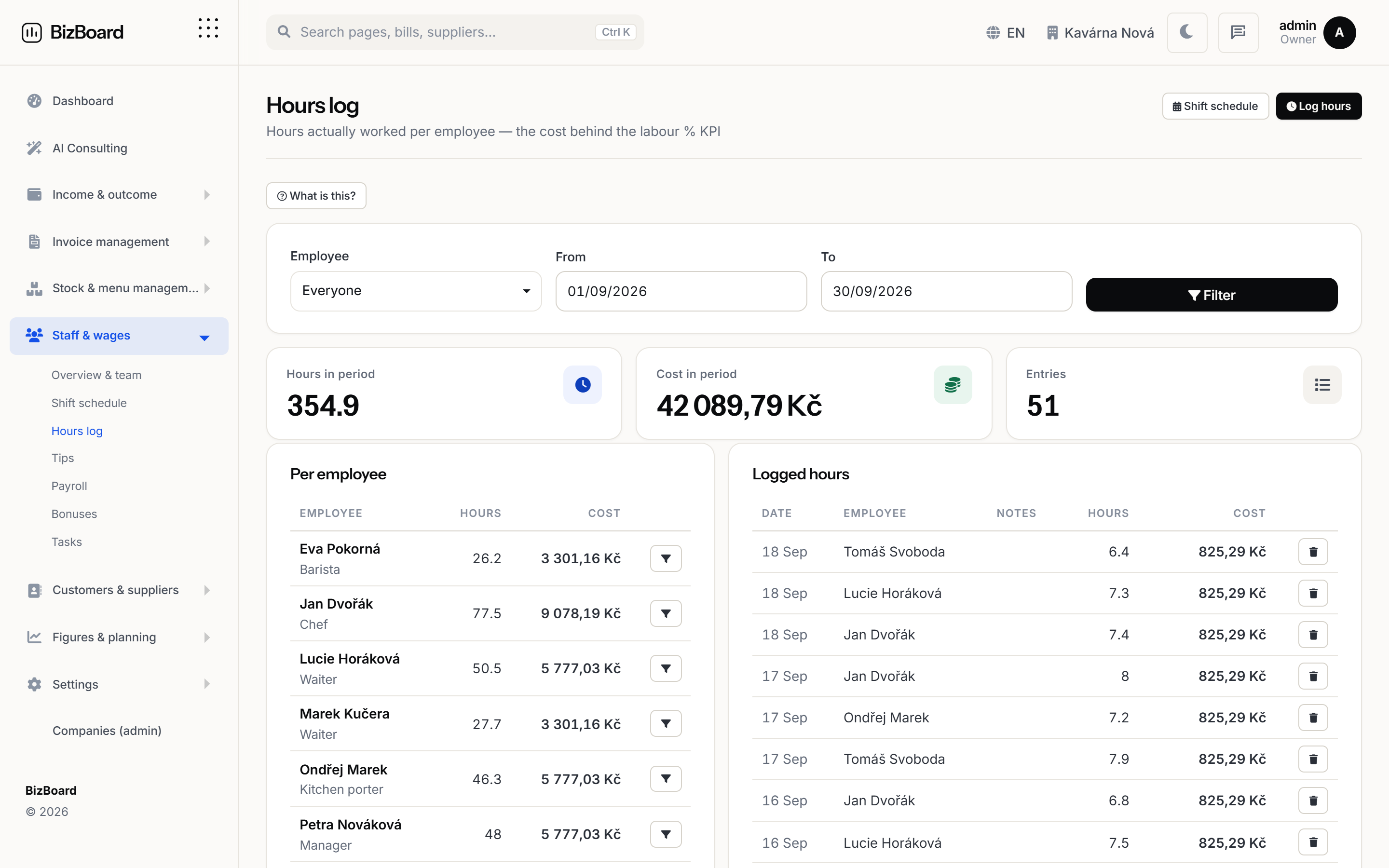
The bills coming the other way
Software subscriptions, contractors, the office, the accountant. They arrive as bills in an inbox and they are the other half of the picture — read, filed, scheduled and turned into one payment file.
Stop finding out in January
Set your country, connect your inbox, and let the month close itself.